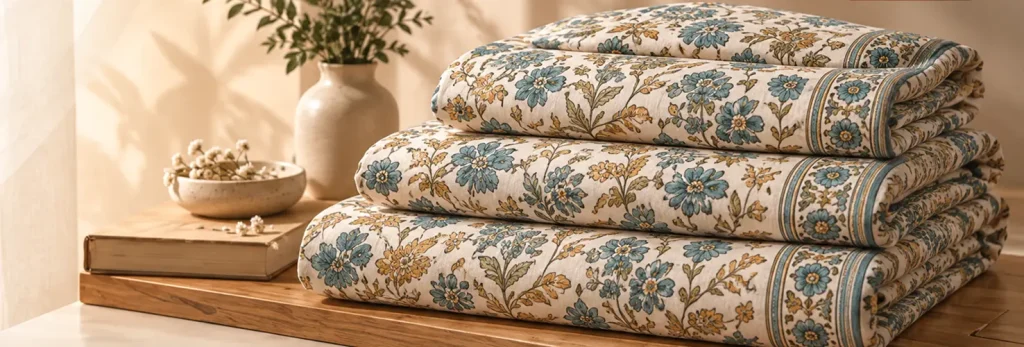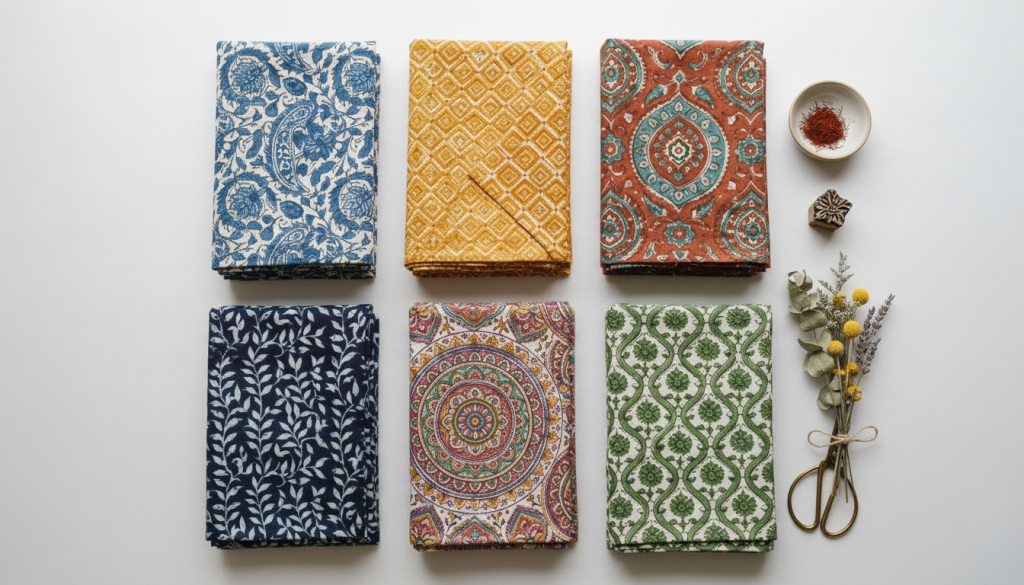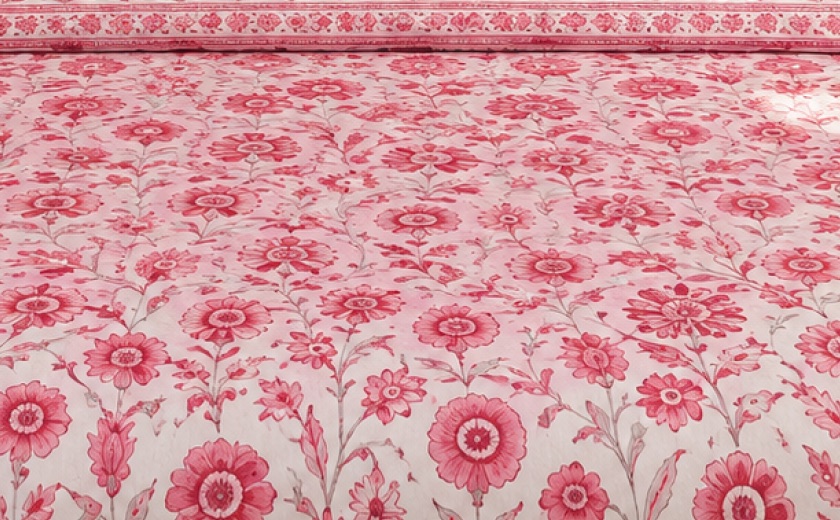
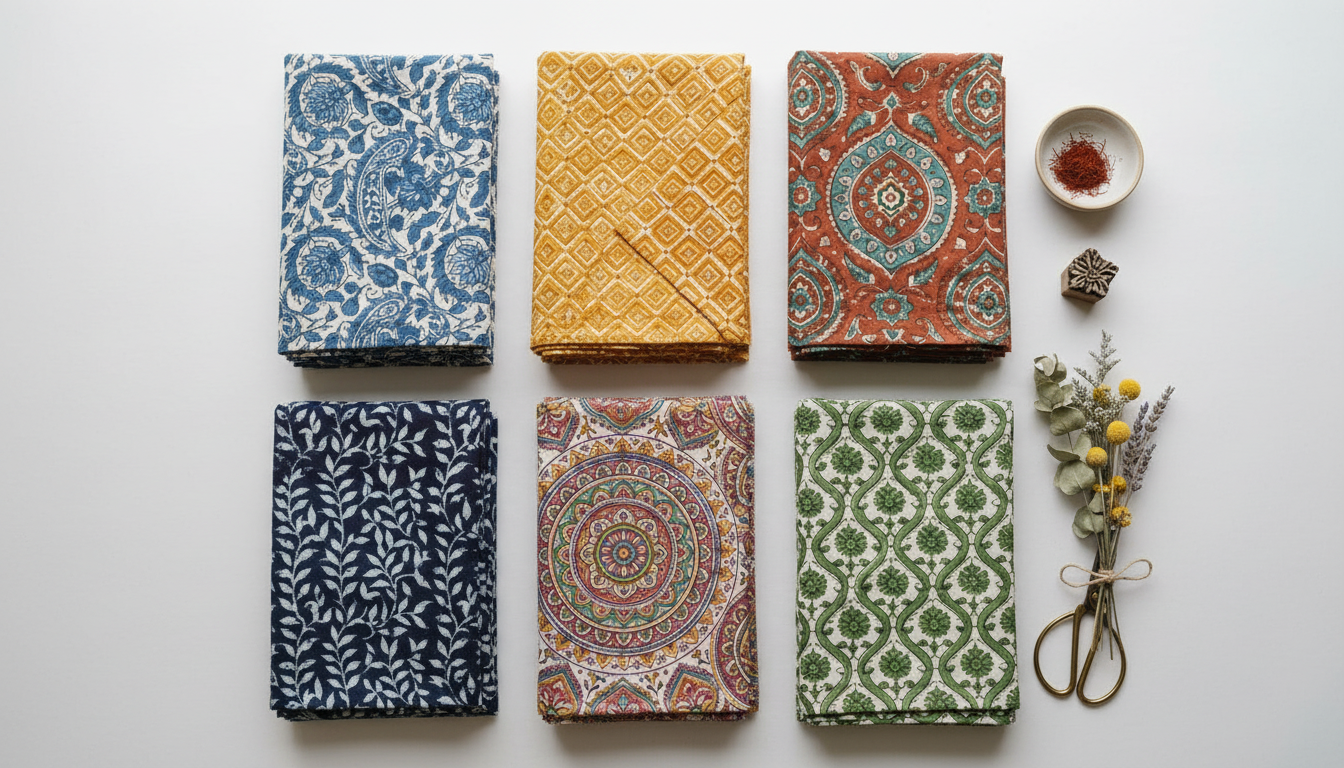
It is 6 a.m. in Sanganer, and the river-side courtyard is already loud with the tap of wood on cloth. Long tables, padded with jute and wrapped in muslin, stretch beneath the neem trees. Each one holds a length of freshly washed cotton, pinned taut and waiting.
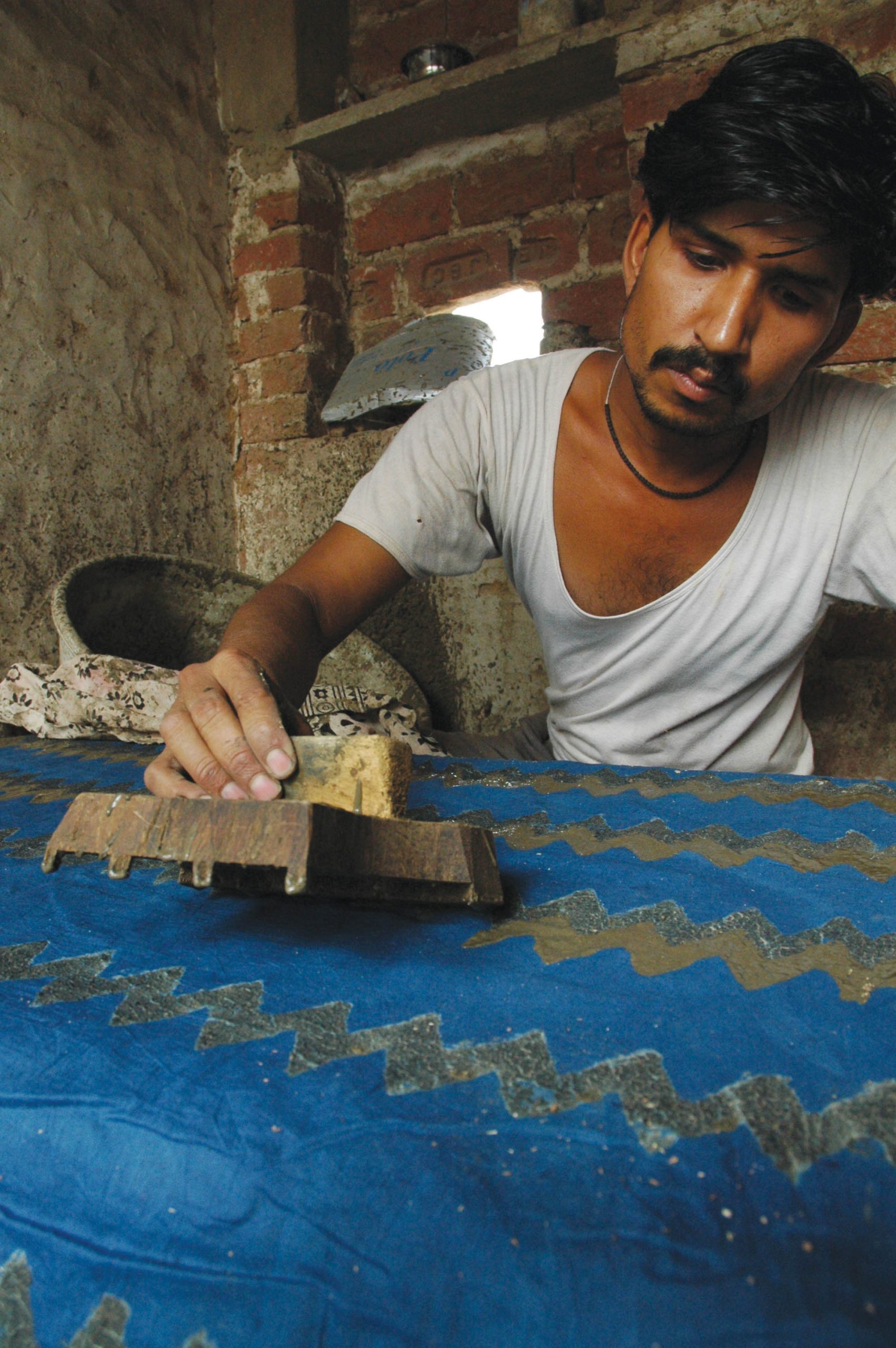
The printer, Rajesh, lifts a teak block the size of a paperback, presses it into a tray of dye, and lowers it onto the fabric with a gentle rock of his wrist. One firm strike with the heel of his hand. Lift. Move the block exactly one register-pin to the right. Repeat, four hundred times.
The printer, Rajesh, lifts a teak block the size of a paperback, presses it into a tray of dye, and lowers it onto the fabric with a gentle rock of his wrist. One firm strike with the heel of his hand. Lift. Move the block exactly one register-pin to the right. Repeat, four hundred times.
The printer, Rajesh, lifts a teak block the size of a paperback, presses it into a tray of dye, and lowers it onto the fabric with a gentle rock of his wrist. One firm strike with the heel of his hand. Lift. Move the block exactly one register-pin to the right. Repeat, four hundred times.
Discover the Craft
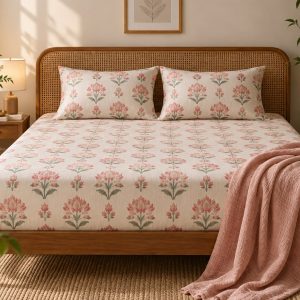
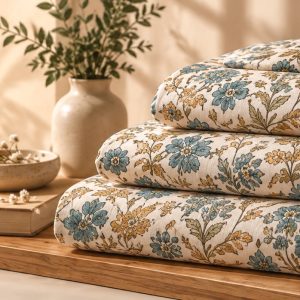
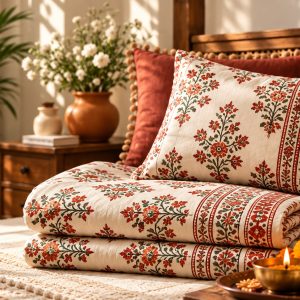
Carved to last generations
Every block begins as seasoned teak, soaked in oil for weeks before a carver draws the motif with a needle. A single design may need three or four blocks — one each for outline, fill and accent — and each takes up to two weeks to cut.
“A machine can print a pattern. Only a hand can print patience.”
The dyes are just as unhurried. Indigo ferments in clay vats for days; madder root is boiled, strained and boiled again. The colours that come off the table look muted, almost shy — until the cloth is washed in the river and the pigments bloom.
What to look for when you buy
Slightly uneven edges — the sign of a hand-pressed block, not a screen.
Colour that deepens after the first wash, never fades to grey.
A GI-tag number stitched into the hem.